

 See My Latest Article on HelloNation
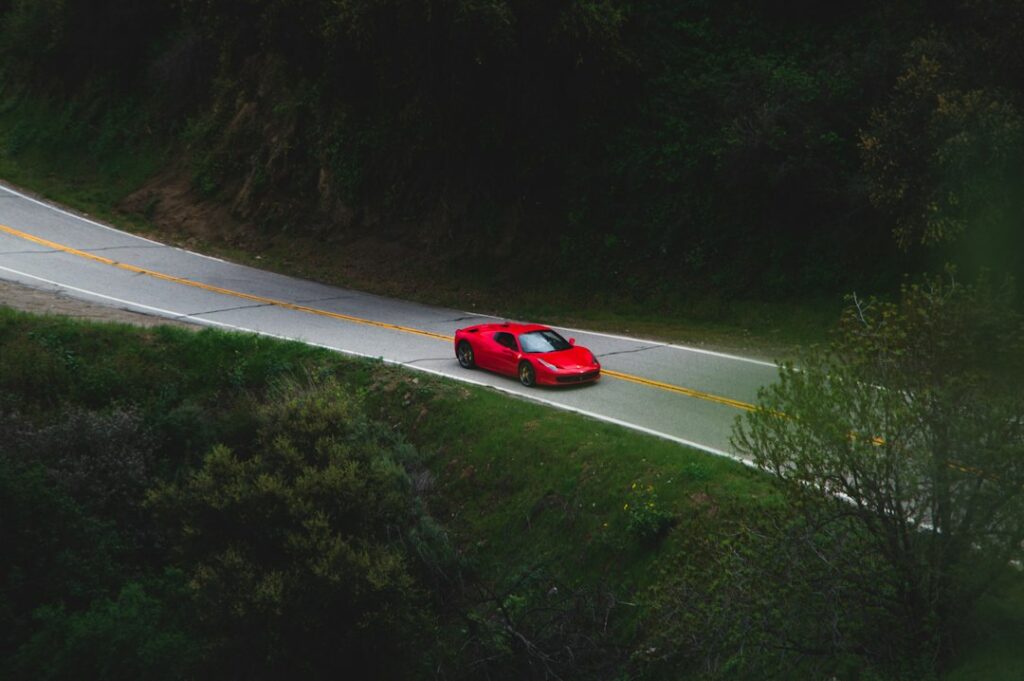
Costa Mesa, CA drivers may encounter both sports cars and supercars on the same roads, but the two categories are not interchangeable. A sports car is generally built to make driving more responsive, agile, and entertaining. A supercar takes that performance focus further through greater speed, specialized engineering, advanced materials, and a more limited-production design.
There is no single legal definition that separates the two. The terms are commonly used to describe different levels of performance and exclusivity rather than fixed vehicle classes.
What is a regular sports car?
A sports car is designed primarily for engaging driving. It may have two seats, a low center of gravity, responsive steering, rear-wheel drive or all-wheel drive, and suspension tuned for cornering rather than comfort alone.
Sports cars can vary widely. Some are compact and relatively practical, while others have powerful engines, high-end brakes, or track-focused equipment. Their defining feature is usually balance: the car is engineered to feel lively and controlled without necessarily pushing every component to the extreme.
A regular sports car may offer:
- Strong acceleration
- Precise steering
- Firm suspension
- A low seating position
- Two-door styling
- Improved braking and cornering ability
- Enough comfort for commuting or weekend driving
A sports car does not need to be the fastest vehicle on the road. Its purpose is often to make ordinary driving more involving.
What makes a supercar different?
A supercar is usually a high-performance sports car developed with fewer compromises. It often combines exceptional acceleration, high cornering capability, advanced aerodynamics, expensive materials, and carefully engineered systems that would be unusual in a conventional performance vehicle.
Supercars are often positioned near the top of a manufacturer’s performance range. Production may be limited, and the design may include technology influenced by motorsports or specialized engineering programs.
Common supercar characteristics include:
- Extremely high power relative to vehicle weight
- Very rapid acceleration
- Advanced braking systems
- Sophisticated suspension and traction controls
- Carbon-fiber or other lightweight materials
- Aerodynamic bodywork that creates or manages downforce
- Mid-engine or rear-mid-engine layouts in many designs
- A highly specialized cabin and driving position
The distinction is not based on horsepower alone. A powerful sports car can outperform an older supercar in a straight line, while a modern supercar may stand apart through braking, aerodynamics, materials, chassis control, and overall engineering integration.
Is a supercar simply a faster sports car?
Not exactly. Speed is one factor, but supercar development typically involves a broader level of specialization.
A sports car may use a powerful version of an engine shared with other vehicles. A supercar may use a powertrain, transmission, cooling system, suspension layout, and aerodynamic package developed specifically for that model. Its structure may also be designed around reducing weight and improving rigidity.
This produces a vehicle that behaves differently at the limits. The difference may be less obvious during a slow commute, but it becomes more apparent during hard acceleration, emergency braking, high-speed cornering, or controlled track driving.
In everyday traffic, both types of vehicles are limited by speed laws, road conditions, traffic, and safety considerations. A supercar’s extra capability does not make public streets an appropriate place to explore its maximum performance.
How do handling and braking differ?
Sports cars are often tuned to provide predictable handling and quick responses. Supercars add more sophisticated systems to manage much higher performance levels.
A supercar may use:
- Carbon-ceramic brakes or similarly specialized braking equipment
- Adjustable dampers
- Electronic torque management
- Active aerodynamic components
- Wide, high-performance tires
- Lightweight wheels
- Performance-oriented stability and traction systems

These features can improve control, but they also increase complexity. High-performance tires may provide excellent grip in suitable conditions while offering less tolerance for cold temperatures, standing water, worn tread, or incorrect inflation.
This matters for local driving. Coastal weather, occasional rain, road debris, uneven pavement, and stop-and-go traffic can affect how performance equipment works. A vehicle designed for dry, warm pavement may not feel the same on a cool or wet morning.
Why do supercars often cost more to maintain?
The purchase price is only one part of ownership. Supercars may require more expensive tires, brakes, fluids, specialty components, and diagnostic equipment. Some parts are produced in smaller quantities, and certain repairs may involve removing substantial bodywork or accessing tightly packaged mechanical systems.
Maintenance costs can rise because:
- Performance tires may wear quickly
- Brake components can be costly to replace
- Lightweight body panels may be expensive to repair
- Complex electronics require specialized diagnosis
- Low ground clearance increases the risk of scraping
- Storage and careful cleaning may be necessary to protect finishes
- Long periods of inactivity can still affect batteries, tires, fluids, and seals
A regular sports car can also be expensive to maintain, especially if it has track-oriented equipment. The difference is that supercar components are often more specialized and less likely to be shared across ordinary vehicles.
Are supercars practical for daily driving?
Some are more practical than others, but practicality is usually secondary to performance and design.
A supercar may have limited luggage space, difficult entry and exit, a low front end, firm suspension, restricted visibility, and a cabin designed around the driver rather than passengers. Driveway ramps, steep parking structures, rough pavement, and raised roadway features can require extra care.
For area households, parking conditions and storage habits may matter as much as performance. A vehicle kept outdoors may face heat, dust, moisture, and surface contamination that require more attention than a typical commuter car. Low-clearance designs also require awareness of pavement transitions and drainage features.
Some newer supercars include front-lift systems, parking cameras, adjustable driving modes, and improved climate control. These features make them easier to use, but they do not turn them into ordinary commuter vehicles.
Does owning a sports car or supercar change legal requirements?
Performance does not remove ordinary road obligations. A street-driven vehicle must comply with applicable safety, registration, equipment, emissions, lighting, tire, and noise requirements.
Modifications can create problems if they affect emissions equipment, exhaust sound, lighting, tires, wheels, or other regulated systems. A vehicle prepared exclusively for competition may not meet the requirements for public-road use.
This is especially relevant in California, where emissions and vehicle-equipment rules can apply to aftermarket modifications. A louder exhaust, altered emissions system, noncompliant lighting setup, or unsuitable tire configuration may create legal and safety concerns even if the vehicle performs well.
Which is better for an ordinary driver?
The answer depends on the intended use. A sports car is generally the more balanced choice for someone who wants responsive handling, enjoyable weekend driving, and a vehicle that remains relatively manageable on public roads.
A supercar is aimed at drivers who value extreme performance, unusual engineering, rarity, and the experience of operating a highly specialized machine. Its advantages are most meaningful in controlled settings or under conditions where its chassis, brakes, tires, and aerodynamics can be used responsibly.
The simplest distinction is this: a sports car is built to make driving more engaging, while a supercar is built to pursue exceptional performance with fewer compromises. The categories can overlap, but the supercar typically sits at a higher level of speed, specialization, cost, and engineering intensity.